



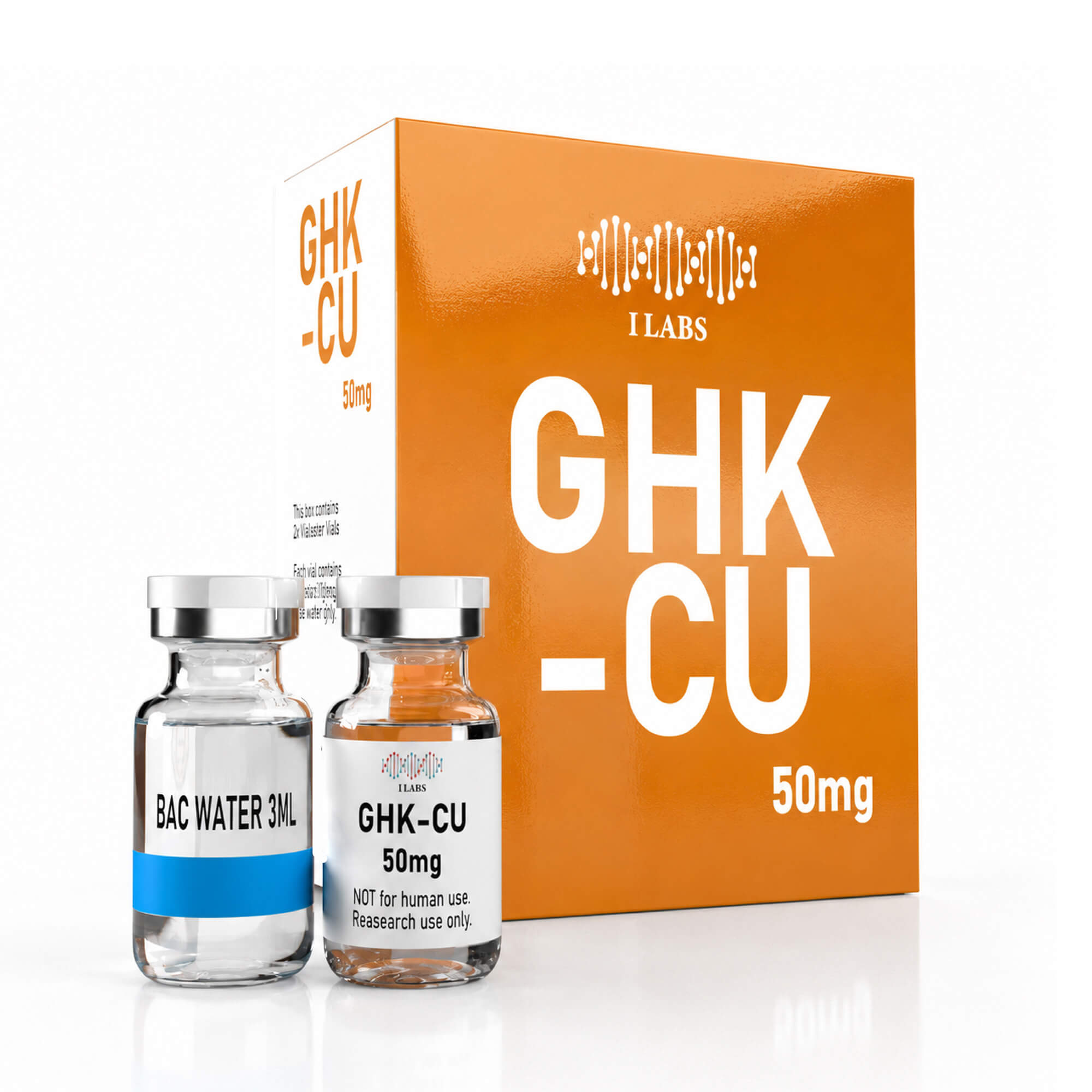
GHK-CU 50mg
GHK-Cu – synthetic peptide complex for research (reference standard)
Purchases are available only in the Polish version of the store and in PLN.
Description
GHK-Cu, also known as Copper Tripeptide-1, Prezatide Copper or copper peptide, is a complex of the tripeptide GHK — glycyl-L-histidyl-L-lysine — with a copper ion. The peptide sequence is written as Gly-His-Lys. This substance has long been of interest in research on skin biology, the extracellular matrix, collagen synthesis, oxidative stress, regulation of gene expression and repair processes at the cellular level.
In the scientific literature, GHK-Cu is primarily investigated as a short copper peptide that may participate in selected regulatory mechanisms associated with tissue remodeling, fibroblast and keratinocyte function, antioxidant activity and the cellular response to damage. Due to the presence of a copper ion, the GHK-Cu complex has a characteristic blue or blue-violet color, typical of many copper compounds.
GHK-Cu 50 mg is offered as a lyophilized powder intended for preparing a working solution under laboratory conditions. The product is a laboratory and analytical reagent intended exclusively for research work. It is not intended for use in humans or animals.
GHK-Cu peptide specifications
| Parameter | Value |
|---|---|
| Substance name | GHK-Cu |
| Other names | Copper Tripeptide-1, Prezatide Copper, copper peptide |
| Tripeptide sequence | Gly-His-Lys |
| Substance type | complex of the tripeptide GHK with a copper ion |
| CAS number of the GHK-Cu complex | 89030-95-5 |
| CAS number of the free tripeptide GHK | 49557-75-7 |
| Molecular formula of the complex | C₁₄H₂₄CuN₆O₄ |
| Molecular weight of the complex | approx. 403.9 g/mol |
| Form | lyophilized powder |
| Color | blue / blue-violet |
| Quantity of substance | 50 mg |
| Included solvent | bacteriostatic water |
| Intended use | for laboratory research only |
GHK-Cu — scientific literature and research areas
Extracellular matrix, collagen and fibroblasts
GHK-Cu has been studied in the context of extracellular matrix remodeling, fibroblast activity and the synthesis of structural tissue components such as collagen, elastin and glycosaminoglycans. This line of research primarily concerns repair processes, the organization of cellular structures and skin biology.
Wound healing and repair processes
The copper peptide GHK-Cu has also been investigated in models related to wound healing, tissue remodeling, angiogenesis and the cellular response to damage. In the literature, it is described as a research substance used in studies of intercellular communication and local regenerative processes.
Gene expression
GHK-Cu and the tripeptide GHK have been studied for their effects on the expression of genes associated with repair processes, oxidative stress, the inflammatory response, nervous system function and cellular aging. This research area mainly involves molecular and bioinformatics analyses.
Oxidative stress and the inflammatory response
GHK-Cu has been investigated in the context of oxidative stress, the regulation of copper levels in the cellular environment and the activity of genes associated with the antioxidant response. Studies have also discussed its potential role in modulating inflammatory and protective processes at the cellular level.
Skin and research models of skin aging
GHK-Cu appears in the literature on skin biology, tissue remodeling, repair processes and age-related changes. These studies include cellular and tissue models, as well as reviews of possible mechanisms of action of copper peptides.
References
- Maquart F.X. et al., 1988 — Stimulation of collagen synthesis in fibroblast cultures by the tripeptide-copper complex glycyl-L-histidyl-L-lysine-Cu²⁺
- Maquart F.X. et al., 1993 — In vivo stimulation of connective tissue accumulation by the tripeptide-copper complex glycyl-L-histidyl-L-lysine-Cu²⁺ in rat experimental wounds
- Pickart L. et al., 2012 — The Human Tripeptide GHK-Cu in Prevention of Oxidative Stress and Degenerative Conditions of Aging: Implications for Cognitive Health.
- Pickart L. et al., 2017 — The Effect of the Human Peptide GHK on Gene Expression Relevant to Nervous System Function and Cognitive Decline
- Dou Y. et al., 2020 — The potential of GHK as an anti-aging peptide
Safety information
LABORATORY REAGENT — FOR RESEARCH USE ONLY
The product is not a medicine, food product, dietary supplement, cosmetic or medical device. GHK-Cu / Copper Tripeptide-1 is offered as a chemical reagent / reference material intended exclusively for laboratory, analytical and scientific research applications.
The product is not intended for use in humans or animals. It must not be ingested, administered, applied or used for therapeutic, diagnostic, preventive, cosmetic or veterinary purposes.
Educational materials about GHK-Cu published on the website are informational and have been prepared based on the available scientific literature. The cited studies concern the substance itself or its research models and do not relate directly to the specific commercial product.
Additional information
| Zawartość | 50 mg |
|---|