



BPC-157 – what is it and how does it work? Effects and research findings
BPC-157 is a synthetic peptide that has attracted interest because of its potential influence on tissue regeneration and protective processes in the body. It is most often discussed in relation to tendons, ligaments, muscles, joints and the gastrointestinal tract. Its effects are associated with processes including tissue blood supply, repair cell activity, collagen production and protection of cells from damage.
It is this broad range of possible mechanisms that has made BPC-157 one of the most widely discussed regenerative peptides. In this article, we explain what this molecule is, how it may work, which effects are associated with it, and why it is studied in relation to the musculoskeletal system, intestines, blood vessels and nervous system.
Disclaimer: This material is for educational and informational purposes only. Its aim is to present the current state of knowledge and directions of research into BPC-157. The content does not constitute medical or pharmaceutical advice or recommendations on the use, dosage or administration of the peptide described. BPC-157 is presented solely in a research context; it is not intended to diagnose, treat or prevent disease, or for use in humans or animals.
BPC-157 at a glance
- What is it? A synthetic pentadecapeptide, meaning a chain made up of 15 amino acids.
- What does the name mean? BPC stands for Body Protection Compound.
- Which mechanisms are being studied? Angiogenesis, microcirculation, fibroblast activity, collagen organization, the nitric oxide system and cytoprotection.
- Which tissues are being studied? Primarily tendons, ligaments, muscles, the gastrointestinal mucosa, nerves, bones and skin.
- What is the level of evidence? Extensive preclinically, but still limited clinically.
BPC-157 – what is it?
BPC-157 is a synthetic peptide made up of 15 amino acids. It is most often described as a regenerative peptide because interest in this molecule centers on tissue repair processes – primarily those involving tendons, ligaments, muscles, skin and the mucosa of the stomach and intestines.
The name BPC comes from the English term Body Protection Compound, which means “a compound that protects the body”. BPC-157 was developed as a synthetic sequence related to a fragment of a compound described in gastric juice. For this reason, the earliest research focused mainly on stomach protection, mucosal healing and effects within the gastrointestinal tract.
Over time, researchers also began to investigate its potential in other tissues. Particular interest was drawn to the possible effects of BPC-157 on blood supply at the injury site, the activity of cells involved in repair, and collagen formation and organization. These processes are important in the regeneration of tendons, ligaments and muscles, and in wound healing.
Structurally, BPC-157 is a short chain of amino acids with the sequence GEPPPGKPADDAGLV. Publications also use the term “pentadecapeptide”, which simply means a peptide consisting of fifteen amino acids.
How does BPC-157 work? Key mechanisms
BPC-157 is being studied for its effects on tissue blood supply, protection and repair. Its potential effects are associated with blood vessel formation, repair cell activity, collagen production and regulation of the response to injury.
No single receptor has been identified that would explain all the observed effects. Instead, research suggests that BPC-157 may influence several interacting processes, depending on the tissue type.
| Mechanism | What does it mean? | Potential significance |
| Angiogenesis | Formation of new blood vessels | Facilitates the supply of oxygen and components needed for repair |
| Microcirculation | Blood flow through the smallest vessels | Supports nutrient delivery to the injury site |
| Fibroblast activity | Activity of cells that repair connective tissue | Contributes to collagen production |
| Nitric oxide regulation | Influence on vascular tone | Helps regulate blood flow |
| Cytoprotection | Protection of cells from damage | May support tissue integrity |
Angiogenesis – formation of new blood vessels
Angiogenesis is the process of new blood vessel formation. It is important during healing because regenerating tissue needs oxygen, nutrients and cells involved in repair.
This is particularly important for tendons and ligaments, which have a poorer blood supply than muscles. Limited blood supply can slow their regeneration.
In cell and animal studies, BPC-157 has been associated with activation of the VEGFR2–Akt–eNOS pathway. This is a signaling system that helps endothelial cells respond to the need for new vessel formation. Observations included their migration, the formation of vascular structures and an increase in the number of vessels in a limb ischemia model.
Angiogenesis therefore concerns the formation of new vessels. Regulation of blood flow in existing vessels, meanwhile, depends on factors including nitric oxide.
Fibroblasts, collagen and connective tissue repair
Fibroblasts are cells involved in connective tissue repair. They produce collagen and other components that form the scaffold of the tissue being repaired.
Collagen provides strength to tissues including tendons, ligaments and skin. During healing, fibroblasts migrate to the injury site, where they produce new fibers and help organize the tissue structure.
In studies on tendon fibroblasts, BPC-157 supported their survival, migration and activity. This effect was associated with the FAK/paxillin pathway, which helps cells attach to their surroundings and move toward the injury site.
Not only the amount of collagen matters, but also its arrangement. It can be compared to the fibers of a rope: strength depends both on the amount of material and on how it is organized.
Nitric oxide and blood flow regulation
Nitric oxide, abbreviated as NO, helps regulate blood vessel tone. By causing vessels to relax, it can influence the amount of blood reaching a tissue.
NO is produced by, among other sources, the endothelium, the layer of cells lining blood vessels. This allows vessels to adjust their diameter to the body’s current needs.
Research into BPC-157 has examined its effects on the eNOS enzyme, which is involved in nitric oxide production, and on the Src–Caveolin-1–eNOS pathway, which is associated with endothelial function.
In simple terms:
- angiogenesis is responsible for the formation of new vessels,
- nitric oxide helps regulate flow in existing vessels.
Inflammatory response and cell protection
Inflammation is a natural stage of healing. It helps remove damaged cells and initiates the repair process. However, if it is too intense or lasts too long, it can hinder regeneration.
Preclinical studies have examined the effects of BPC-157 on inflammatory markers, oxidative stress and tissue integrity. Oxidative stress means an excess of reactive molecules that can damage cells.
This mechanism is associated with cytoprotection, meaning protection of cells from damage. It is particularly important in the stomach and intestines, where the mucosa is constantly exposed to acid, enzymes and other irritants.
The potential effects of BPC-157 therefore involve several related processes: improved delivery of oxygen and nutrients to tissues, repair cell activity, collagen repair and protection of cells at the injury site.
Which effects of BPC-157 have been examined in studies?
BPC-157 is primarily studied in relation to tissue regeneration and protection. Most attention has been given to tendons, ligaments, muscles and the mucosa of the stomach and intestines. Its effects on nerves, bones, skin and wound healing have also been examined.
Potential effects may differ depending on the tissue type. A tendon regenerates differently from a muscle, nerve or intestinal mucosa, so different studies have assessed different parameters.
BPC-157 and tendons, ligaments and joints
Most research on the musculoskeletal system focuses on tendons and ligaments, rather than the entire joint.
A tendon connects a muscle to a bone, while a ligament stabilizes the connection between bones. A joint is a more complex structure that also includes cartilage, the joint capsule and surrounding tissues. Therefore, the phrase “BPC-157 for joints” may in practice refer to various elements of the musculoskeletal system.
Animal models have been used to examine, among other aspects:
- healing of a transected Achilles tendon,
- repair of the tendon–bone junction,
- regeneration of an injured knee ligament,
- collagen fiber arrangement,
- strength and function of the tissue being repaired.
The observed effects were primarily associated with fibroblast activity, improved blood supply and collagen organization. These processes may influence structural repair and subsequent strength.
It is important to distinguish tissue regeneration from pain reduction alone. Joint symptoms can originate in many structures, so an improvement experienced by a user does not automatically indicate which tissue has changed.
BPC-157 and muscles
In muscles, BPC-157 has been studied for fiber regeneration and recovery of function after injury.
Muscles have a better blood supply than tendons, and specialized satellite cells participate in their repair. After injury, these cells help repair existing fibers and form new areas of tissue.
Studies have examined, among other aspects:
- repair of damaged muscle fibers,
- the intensity of the inflammatory response,
- tissue appearance and organization,
- healing of the muscle–tendon junction,
- recovery of muscle strength and function.
The reported changes were associated with blood supply, regulation of inflammation and repair processes occurring in the damaged tissue.
BPC-157 and the stomach and intestines
The gastrointestinal tract is one of the longest-studied areas of BPC-157 activity. Interest focuses primarily on mucosal protection and regeneration.
The gastric mucosa protects the stomach wall from acid and digestive enzymes. In the intestines, the epithelial layer forms a barrier separating the inside of the gastrointestinal tract from the body’s other tissues.
Studies have examined the effects of BPC-157 on:
- gastric mucosal damage,
- intestinal barrier integrity,
- blood flow within the gastrointestinal tract,
- the inflammatory response,
- the rate of epithelial renewal,
- preservation of normal intestinal structure.
Some experiments showed less damage and better preservation of mucosal structure. These effects were associated with cytoprotection, improved microcirculation and regulation of inflammatory processes.
Cytoprotection means protecting cells from the harmful effects of factors such as acid, ischemia or irritants.
BPC-157 and nerves
In the nervous system, BPC-157 has primarily been examined for peripheral nerve regeneration and nerve cell protection.
After nerve injury, not only the nerve fiber itself must be repaired, but also its sheaths and its connection to the appropriate tissue. This process is slower and more complex than the regeneration of many other structures.
Studies have assessed:
- repair of damaged nerves,
- sensory and motor functions,
- nerve signal conduction,
- structural changes in regenerating tissue,
- processes described as neuroprotective.
The effects of BPC-157 have also been studied in selected models of spinal cord injury and neurotransmitter system disorders. However, this area remains more experimental than research on tendons or the gastrointestinal tract.
BPC-157 and bones
In bones, BPC-157 has been studied for new vessel formation and the organization of tissue undergoing repair.
Bone healing requires the formation of a callus, which initially joins the damaged fragments. It is then gradually remodeled into mature bone tissue. Blood supply plays an important role in this process because vessels deliver oxygen and the components needed for repair to the cells.
Animal models have been used to examine, among other aspects:
- healing of bone defects,
- callus formation,
- vessel development,
- repair of the tendon–bone junction,
- organization of regenerating tissue.
BPC-157 and skin and wound healing
Skin healing requires coordination between blood vessels, fibroblasts, collagen and epidermal cells.
Studies on wounds and burns have assessed:
- the rate of wound closure,
- formation of new epidermis,
- blood vessel development,
- collagen production and arrangement,
- strength of the repaired skin.
The potential effects of BPC-157 were associated with acceleration of individual stages of healing and better organization of new tissue.
What is the level of evidence in each area?
| Area | What was most commonly assessed? | Predominant type of evidence | Overall assessment of the evidence |
| Tendons and ligaments | Collagen, strength, healing and function | Cell and animal studies | One of the best-documented areas |
| Muscles | Tissue regeneration, inflammation and recovery of function | Animal models | Moderately extensive body of evidence |
| Stomach and intestines | Mucosa, intestinal barrier and inflammation | Mainly animal models | One of the best-documented areas |
| Nerves | Regeneration, conduction and motor function | Animal models | Early-stage and experimental research |
| Bones and skin | Healing, blood supply and tissue organization | Animal models | Limited evidence, but mechanistically consistent |
| Humans | Knee pain, bladder symptoms and tolerability | Small case series and pilot studies | Very limited clinical evidence |
What does research into BPC-157 actually show?
Research indicates that BPC-157 may influence processes related to tissue healing, vascular function and cell protection. The most promising findings concern tendons, ligaments, muscles and the gastrointestinal tract. However, most of these observations come from laboratory and animal studies. Human data are much more limited.
In simple terms: the potential mechanisms of BPC-157 have been described relatively well, but much less is known about the magnitude and reproducibility of its effects in humans. BPC-157 remains an experimental substance and is not intended for self-administration by humans.
What do laboratory and animal studies show?
Cell studies make it possible to investigate which biological processes a given molecule may influence. In the case of BPC-157, researchers have examined fibroblast migration, blood vessel formation, endothelial function and signals involved in regeneration, among other aspects.
Animal models, in turn, allow the assessment of an entire tissue. Researchers can examine not only changes occurring in cells, but also:
- how collagen fibers are arranged,
- whether the tissue regains strength,
- how its blood supply changes,
- whether limb or organ function improves,
- what healing looks like under a microscope.
Research into BPC-157 has reported, among other findings, improved healing of tendons, ligaments and muscles, improvement in selected blood flow parameters, and protection of the gastrointestinal mucosa.
It is also worth considering that many experiments come from a limited number of research teams. Independent replication of the findings by other institutions would increase confidence that the observed effects are consistent and reproducible.
What has been studied in humans?
Human studies are small and cover only a few areas. To date, researchers have examined knee pain, symptoms of interstitial cystitis and short-term tolerability of intravenous administration, among other aspects.
| Study | What did it examine? | What was observed? | Main limitation |
| PCO-02 phase I study | Safety and pharmacokinetics of oral BPC-157 in 42 healthy volunteers | The study was registered, but full results were not made available in the registry | No public data allowing assessment of the results |
| Knee pain study | Intra-articular administration of BPC-157 to people with various types of knee pain | Most people receiving BPC-157 alone reported improvement | Small group, no placebo and no objective measurement of tissue changes |
| Pilot study on interstitial cystitis | Symptoms in 12 women with chronic bladder complaints | Participants reported marked improvement in symptoms | No control group and a very small number of participants |
| Pilot study of intravenous administration | Short-term tolerability of BPC-157 | No significant changes were recorded in the parameters assessed | The study included only two people |
The most frequently cited knee pain study was retrospective, meaning it was based on an analysis of previous treatment. Of the 12 people who received BPC-157 alone and were followed up, 11 reported improvement, and seven reported that the effect lasted for more than six months.
The finding is interesting, but it does not yet show how much of the improvement was attributable to BPC-157 itself. The study did not include a placebo, did not randomly assign participants to groups, and did not use standardized imaging to confirm a change in joint structure.
The other pilot studies should be interpreted similarly. They may indicate directions for further research, but their small scale does not allow researchers to determine how often an effect occurs or in whom it would be most likely. The current state of human data is summarized in the review “Regeneration or Risk?”.
How quickly does the body process BPC-157?
Pharmacokinetics describes how the body absorbs, distributes, metabolizes and eliminates a substance. The most detailed published study of BPC-157 to date was conducted in rats and beagle dogs.
In a pharmacokinetic study of BPC-157 following intramuscular administration, the highest concentration was reached within a few minutes. The half-life, meaning the time required for the concentration to decrease by half, was less than 30 minutes.
BPC-157 was then broken down into shorter peptide fragments and ultimately into individual amino acids. The breakdown products were eliminated mainly in urine and bile.
A molecule’s brief presence in the blood does not necessarily mean an equally brief effect on tissues. A signal triggered by the peptide may initiate processes that last longer than the presence of BPC-157 in circulation itself. However, it is not known whether metabolism occurs in the same way in humans, because complete, publicly available human pharmacokinetic data are still lacking.
Forms, stability and quality of BPC-157
BPC-157 is most commonly available as a lyophilized powder, solution, tablets, capsules or spray. Lyophilization involves removing water at a low temperature, making the peptide easier to store. Once a solution has been prepared, its stability is affected by factors including temperature, light and storage time.
When assessing a laboratory reagent, it is worth considering the stated purity, substance content, batch number and analytical documentation. One of the most commonly used methods for assessing purity is HPLC, or high-performance liquid chromatography.
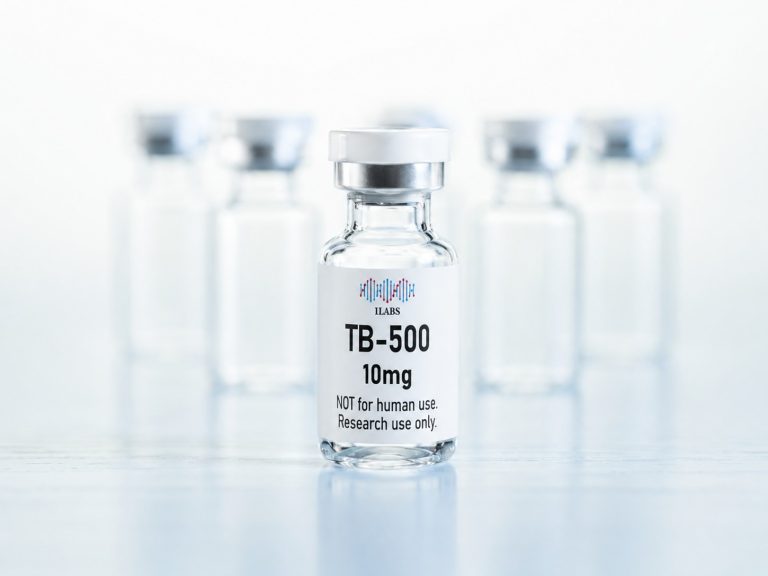
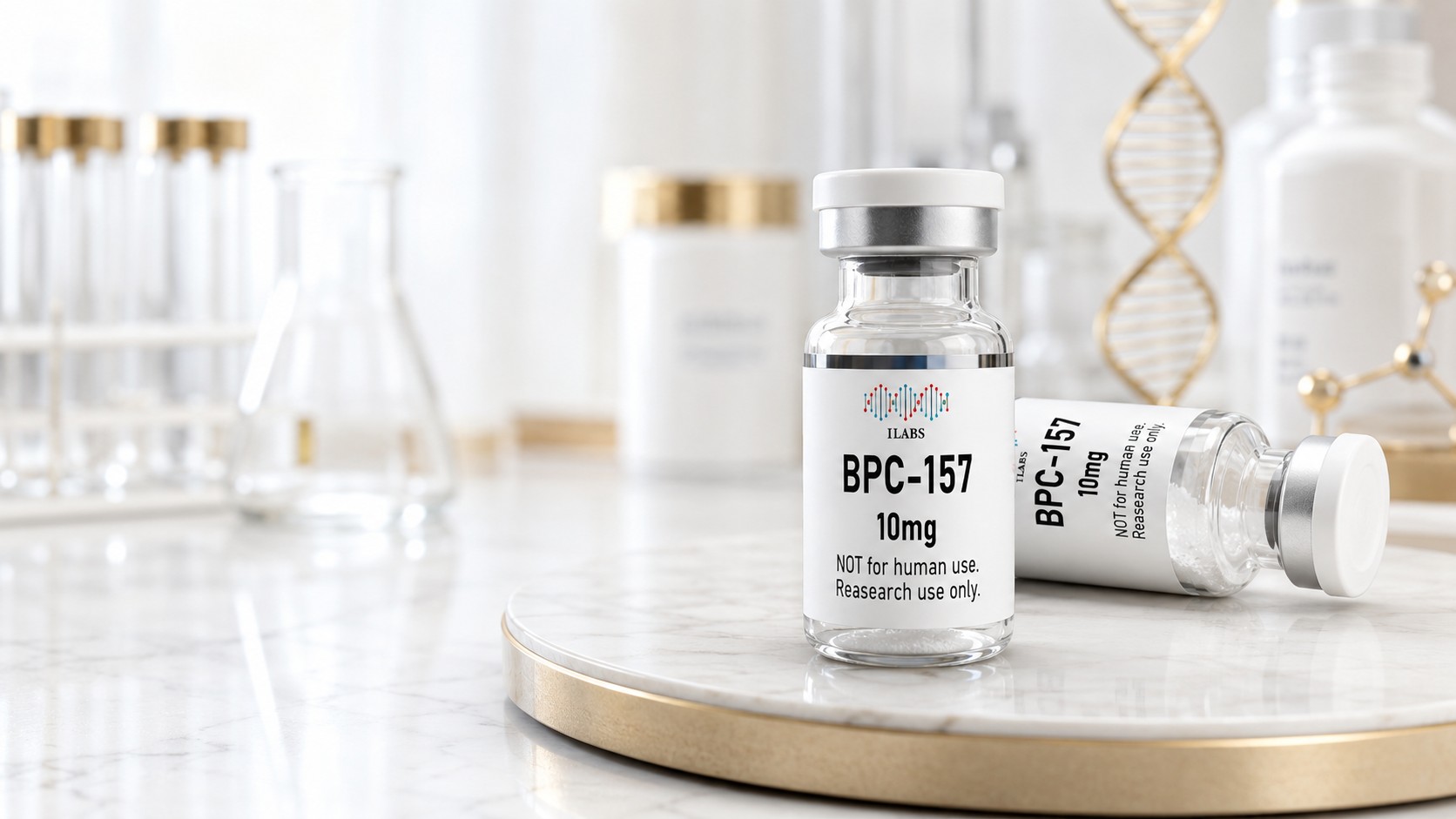
At ILABS, we offer BPC-157 10 mg as a lyophilized research peptide with a stated purity above 99%, determined by HPLC. The product is intended for laboratory applications only.
BPC-157 – side effects, legal status and sport
Side effects
The full adverse-effect profile of BPC-157 in humans has not been established. Available information comes from small studies and user reports, making it difficult to clearly assess the frequency and causes of reported symptoms.
Potential risks may arise both from the effects of the substance itself and from impurities, discrepancies between the composition and the label, or concurrent use of other substances. The US FDA highlights the possibility of immune system reactions and insufficient safety data.
Legal status
BPC-157 is not an approved medicine for human use. Selling the compound as a laboratory reagent does not mean it has been authorized for therapeutic use.
BPC-157 and sport
BPC-157 is not an anabolic steroid, but a peptide. Nevertheless, it is on the WADA Prohibited List under category S0, which covers non-approved substances.
The prohibition applies both in-competition and out-of-competition, so an athlete’s use of BPC-157 may lead to a violation of anti-doping rules.
BPC-157 and TB-500 – key differences
BPC-157 and TB-500 are different peptides studied for partly distinct regenerative processes.
BPC-157 is a peptide consisting of 15 amino acids. Research primarily examines its effects on tissue blood supply, fibroblast activity, collagen production and organization, and cell protection. For this reason, it most often appears in studies on tendons, ligaments, muscles and the gastrointestinal tract.
TB-500 is a name used for a synthetic peptide related to thymosin beta-4. This line of research mainly concerns actin – a protein that helps cells maintain their shape and move. Thymosin beta-4 is therefore primarily associated with cell migration, vessel formation and remodeling of damaged tissue.
Because of their different mechanisms, BPC-157 and TB-500 could theoretically complement each other in repair processes. BPC-157 is more often associated with blood supply, fibroblasts and collagen, whereas TB-500 is associated with cell movement and actin organization.
However, this does not mean that their combined effects have been confirmed. There are no reliable studies comparing the two peptides or assessing the efficacy and safety of their combination in humans. In addition, some data attributed to TB-500 come from studies on full-length thymosin beta-4, so these findings should not automatically be treated as evidence for every product called TB-500.
Frequently asked questions about BPC-157
Summary
The effects of BPC-157 are primarily examined in relation to blood vessels, microcirculation, fibroblast activity, collagen organization and cell protection. This combination of mechanisms explains the interest in tendons, muscles, ligaments, the gastrointestinal tract, nerves and wound healing.
The most extensive body of knowledge comes from cell and animal studies. Human data consist of small, uncontrolled observations and a pharmacokinetic evidence base that remains incomplete in the public domain. BPC-157 therefore remains an interesting subject of research, but its actual effects in humans have not yet been described with the precision typical of approved therapies.
Sources and publications
- McGuire FP et al. Regeneration or Risk? A Narrative Review of BPC-157 for Musculoskeletal Healing. 2025. Narrative review. PubMed
- Hsieh MJ et al. Therapeutic potential of pro-angiogenic BPC157 is associated with VEGFR2 activation and up-regulation. 2017. Cell and animal study. PubMed
- Chang CH et al. The promoting effect of pentadecapeptide BPC 157 on tendon healing involves tendon outgrowth, cell survival, and cell migration. 2011. Study on tendon fibroblasts. PubMed
- Hsieh MJ et al. Modulatory effects of BPC 157 on vasomotor tone and the activation of Src-Caveolin-1-eNOS pathway. 2020. Study on cells and isolated aorta. PubMed
- Gwyer D et al. Gastric pentadecapeptide body protection compound BPC 157 and its role in accelerating musculoskeletal soft tissue healing. 2019. Review of preclinical studies. PubMed
- Vasireddi N et al. Emerging Use of BPC-157 in Orthopaedic Sports Medicine: A Systematic Review. 2025. Systematic review. PubMed
- ClinicalTrials.gov. PCO-02 – Safety and Pharmacokinetics Trial, NCT02637284. Phase I study registry entry. ClinicalTrials.gov