




Peptides and joint regeneration – BPC-157, TB-500 and other peptides in light of research
Research on peptides in relation to joints currently spans several different areas — from laboratory experiments and animal models to early or more advanced clinical studies, depending on the compound being investigated.
Scientists are examining, among other things, the effects of selected peptides on tendon and ligament healing, connective tissue cell activity, processes occurring in cartilage, and joint pain and function.
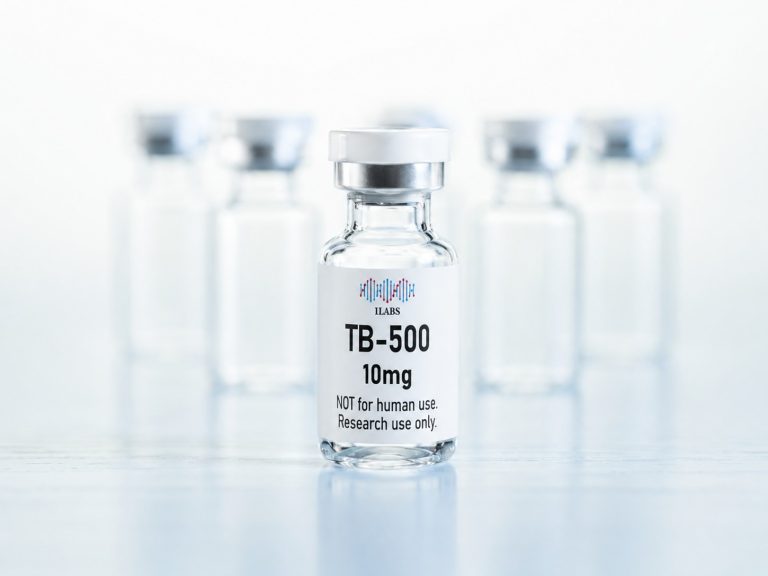
BPC-157 and TB-500 are currently receiving considerable attention. For BPC-157, there is a relatively large amount of preclinical data on musculoskeletal tissues, as well as initial small-scale observations in humans. For TB-500, the situation is more complex, because much of the research on repair processes has been conducted using full-length thymosin beta-4 rather than the fragment known as TB-500.
Another area of research focuses more directly on cartilage. This includes Link N and TPX-100. Link N has been investigated for its effects on the production of cartilage matrix components, while TPX-100 has also been evaluated in clinical studies examining structural changes visible on magnetic resonance imaging.
In this article, we examine which peptides are being studied in relation to joints, what the most interesting findings concern, and how strong the currently available evidence is.
Disclaimer: This material is for educational purposes only and provides a review of currently available scientific publications on selected peptides and the areas in which they are being studied. The description of research findings does not constitute a recommendation, instructions or encouragement to use BPC-157, TB-500 or any other substances mentioned in humans or animals, nor does it confirm their efficacy or safety for such use.
Key information
- BPC-157 is being studied primarily in relation to fibroblasts, tendons, ligaments and tissue healing processes. Most available data are preclinical, although small-scale observations in humans also exist.
- TB-500 and full-length thymosin beta-4 are not the same compound. This matters because many studies on tissue healing concern full-length Tβ4.
- Data on the direct effects of BPC-157 and TB-500 on cartilage are much more limited than data on soft tissues.
- Link N and TPX-100 are examples of peptides studied more directly in relation to cartilage and joint structure.
- Collagen peptides have been evaluated in randomized clinical trials primarily for joint pain and function.
Which peptides are being studied in relation to joint regeneration?
In practice, the term “peptides and joint regeneration” encompasses compounds studied in relation to different tissues and processes.
| Peptide | Main research area |
| BPC-157 | fibroblasts, tendons, ligaments, healing processes |
| TB-500 / thymosin beta-4 | cell migration and tissue repair processes |
| Link N | production of cartilage components |
| TPX-100 | cartilage and subchondral bone |
| Collagen peptides | joint pain and function |
BPC-157 and TB-500 are widely discussed in relation to the repair of tissues surrounding the joint. However, this does not mean that these substances have the most direct evidence concerning cartilage itself.
When cartilage tissue is the focus of analysis, research on Link N and TPX-100 provides a different type of information. For collagen peptides, meanwhile, most clinical data focus on parameters such as joint pain and function.
How are the effects of peptides on joints assessed?
Not all findings from joint research have the same significance.
A laboratory study can test whether a particular peptide affects the behavior of specific cells. Examples include fibroblasts involved in forming and organizing connective tissue, or cartilage cells that produce its basic components.
Animal models allow researchers to analyze more complex processes occurring throughout a tissue — including its structure, fiber organization and mechanical properties.
Clinical studies in humans, meanwhile, can assess pain, stiffness, physical function or structural changes visible on imaging.
A finding concerning pain reduction therefore answers a different question from an observation of changes in cartilage thickness, bone structure or the mechanical properties of a ligament.
This distinction is important when interpreting research on individual peptides.
BPC-157 in research on tissue regeneration and healing
BPC-157 is a peptide consisting of 15 amino acids. Research related to the musculoskeletal system has primarily examined its effects on fibroblasts, tendons, ligaments and processes associated with tissue healing.
Most data come from laboratory studies and animal models. The first small-scale human studies have also emerged in recent years, but the clinical evidence base remains much smaller than the preclinical one.
BPC-157, fibroblasts and tendon healing
One of the best-described areas of BPC-157 research is its effect on tendon fibroblasts.
Fibroblasts are cells involved in producing and organizing connective tissue. They produce collagen, among other components, and migrate toward the site of injury during healing.
A laboratory study using BPC-157 observed increased fibroblast migration and improved survival under stress conditions. However, no direct increase in their proliferation was observed.
Some of these changes were linked to the FAK–paxillin pathway. In simple terms, these mechanisms are involved in processes such as cell attachment to its surroundings, changes in cell shape and movement.
These processes may be important during tendon healing, because cells involved in forming new tissue must migrate to the site of injury and participate in organizing the developing matrix.
BPC-157 and ligaments
BPC-157 has also been evaluated in animal models of ligament injury.
Researchers examined limb function, the appearance of healing tissue, its microscopic structure and its mechanical properties, among other factors. Improvements in some of these parameters were observed in groups receiving BPC-157 compared with control groups.
Studies of this type allow assessment of processes occurring throughout the healing tissue, rather than only the behavior of individual cells. However, they remain preclinical studies.
Has BPC-157 been studied in humans?
Yes, but the amount of available data is small.
A retrospective study on knee pain was published in 2021. Of the 17 people included in the analysis, 16 could be contacted later. Twelve people received BPC-157 alone, and four received BPC-157 combined with full-length thymosin beta-4.
In the group receiving BPC-157 alone, 11 of 12 people reported a substantial improvement in pain. Overall, 14 of the 16 people included in the follow-up assessment reported improvement.
However, the design of this study significantly limits the ability to draw broader conclusions. The group was small, there was no conventional placebo group, and improvement was assessed primarily through subsequent contact with participants.
No standardized tools were used to assess function, quality of life or stiffness, and no follow-up joint imaging was performed.
The study therefore provides preliminary data on reported knee pain, but does not answer whether BPC-157 affected the structure of cartilage or other joint components.
A small pilot study on the safety of BPC-157 in humans was also published in 2025. It included two people. No adverse effects or unfavorable changes in the laboratory parameters analyzed were found during the observation period.
Given the very small sample, this result should be treated solely as a preliminary observation.
Does BPC-157 research directly concern cartilage?
The best-described data on BPC-157 relate to tendons, ligaments, fibroblasts and processes occurring in soft tissues.
Studies directly addressing articular cartilage are much more limited.
The current body of BPC-157 research is therefore more closely associated with the healing of structures surrounding the joint than with direct cartilage regeneration.
TB-500 and thymosin beta-4 in tissue regeneration research
TB-500 is another compound frequently mentioned in discussions of regenerative processes. When analyzing the literature, however, it is essential to distinguish clearly between TB-500 and full-length thymosin beta-4.
TB-500 and thymosin beta-4 — how do they differ?
Thymosin beta-4, designated Tβ4, is a naturally occurring peptide consisting of several dozen amino acids.
In contrast, chemical analysis of a product referred to as TB-500 identified the acetylated fragment corresponding to amino acids 17–23 of thymosin beta-4: Ac-LKKTETQ.
This distinction is important when interpreting scientific publications.
Much of the research on healing and repair processes has been conducted using full-length Tβ4. The results of such studies cannot automatically be treated as data on TB-500 itself.
Which processes are studied in relation to thymosin beta-4?
One important aspect of thymosin beta-4 biology is its association with actin.
Actin forms part of the cell’s internal framework and participates in processes associated with changes in cell shape and movement.
For this reason, thymosin beta-4 has been studied in relation to cell migration, the organization of the healing process and blood vessel formation, among other areas.
Thymosin beta-4 and ligament healing
Full-length Tβ4 has been evaluated in animal models of ligament injury.
More orderly fiber organization and improvements in selected mechanical properties were observed in the tissue studied compared with the control group.
The results therefore indicated changes in the ligament repair process in a research model using full-length thymosin beta-4.
However, these are not direct data on the TB-500 fragment itself.
How much data concern TB-500 itself?
This highlights one of the largest gaps between the popularity of TB-500 and the state of the scientific literature.
For BPC-157, there are a number of publications that directly analyze this specific peptide.
For TB-500, by contrast, much of the information on potential mechanisms and healing processes comes from research on full-length thymosin beta-4.
The FDA also points to the very limited amount of human data on the TB-500 fragment itself and the lack of information allowing its safety profile to be adequately characterized.
BPC-157 or TB-500 — how do they differ?
| Feature | BPC-157 | TB-500 / thymosin beta-4 |
| Main research focus | fibroblasts, tendons, ligaments | cell migration and repair processes |
| Data on ligaments | direct preclinical studies of BPC-157 | primarily studies of full-length Tβ4 |
| Data on cartilage | limited | limited |
| Human data | limited | very limited for TB-500 itself |
| Main limitation | predominance of preclinical data | little direct data on TB-500 itself |
BPC-157 currently has more direct data on musculoskeletal tissues.
For TB-500, it is particularly important to check whether a cited study actually concerns TB-500 itself or full-length thymosin beta-4.
BPC-157 and TB-500 together — what is known about this combination?
BPC-157 and TB-500 are often discussed together in online materials.
Interest in this combination stems from the assumption that the two compounds might affect different aspects of repair processes. However, no high-quality clinical studies have been conducted that demonstrate that combining BPC-157 with TB-500 produces a greater effect than either compound studied separately.
In the small study on knee pain, some participants received BPC-157 together with full-length thymosin beta-4, not the TB-500 fragment.
This study therefore does not directly evaluate the combination of BPC-157 and TB-500.
Link N and TPX-100 — peptides studied more directly in relation to cartilage
When the focus is directly on cartilage, Link N and TPX-100 are worth considering.
These represent different research areas from those that dominate studies of BPC-157 and TB-500.
Link N
Link N is a short fragment of a protein associated with the cartilage matrix.
Studies have examined its effects on processes leading to the production of basic cartilage components. Laboratory studies of human cartilage observed increased synthesis of proteoglycans and type II collagen.
Proteoglycans contribute to water binding in cartilage, while type II collagen is an important component of its structure.
Link N is therefore an interesting example of a peptide studied directly in relation to cartilage tissue metabolism.
However, the available data remain primarily laboratory-based.
TPX-100
TPX-100 is a fragment of the MEPE protein.
It has been studied for its effects on cells involved in cartilage and bone formation. Publications have described, among other things, its association with cell differentiation leading to the formation of these tissues.
A randomized clinical trial assessed changes in knee joints using magnetic resonance imaging.
Joints exposed to TPX-100 showed slower progression of pathological bone shape changes than control joints, and bone shape changes were associated with changes in cartilage thickness.
This is an interesting structural signal, because the finding concerned changes visible on imaging rather than only cell behavior under laboratory conditions.
Collagen peptides and joints — what does the research show?
Collagen peptides belong to a different category from BPC-157, TB-500, Link N and TPX-100.
They are produced by breaking down collagen into smaller fragments and are used as ingredients in foods and supplements.
Unlike BPC-157 and TB-500, collagen peptides have been evaluated in many randomized trials on joint symptoms.
Placebo-controlled studies have observed reduced pain and improved function in some people with knee osteoarthritis, among other findings. Similar results have been reported in studies of various hydrolysates and specific collagen peptides.
The best-documented data therefore concern symptoms and physical function.
This is a different type of information from laboratory observations on the production of cartilage components or preclinical studies of ligament healing.
Individual collagen preparations differ in their composition and in the characteristics of the peptides they contain. A result obtained for a specific product should therefore not automatically be attributed to all collagen hydrolysates.
Safety and research status of BPC-157 and TB-500
For BPC-157 and TB-500, the amount of human data remains small compared with the level of interest in these compounds.
For BPC-157, a small study on knee pain and a very small pilot safety study are available. These data do not yet allow efficacy or the safety profile to be precisely determined in a larger population.
The FDA highlights, among other things, the possibility of immune responses to peptide products and issues related to substance characterization and potential impurities.
For TB-500, the agency additionally points to a lack of sufficient human data.
The subject also remains under regulatory review.
In July 2026, BPC-157 and TB-500 were discussed by the U.S. Pharmacy Compounding Advisory Committee as part of an assessment of their potential use in the U.S. pharmacy compounding system.
At that time, the FDA evaluated BPC-157 in relation to ulcerative colitis and TB-500 in relation to wound healing.
The compounding review process itself does not mean that these substances have been approved as drugs or that their use in joint regeneration has been confirmed.
Peptides and joint regeneration — summary
Research on peptides and joints is developing in several different directions, and individual compounds are at different stages of evaluation.
BPC-157 has preclinical data on fibroblasts, tendons and ligaments. Laboratory studies have observed changes in fibroblast migration and survival, while animal models have examined improvements in selected tissue healing parameters. Initial small-scale observations on knee pain in humans are also available.
TB-500 has considerably less direct data. Much of the literature on repair processes concerns full-length thymosin beta-4, so distinguishing between the two compounds is crucial when interpreting findings.
When the analysis focuses directly on cartilage, other research areas include Link N and TPX-100. Laboratory studies of Link N have observed changes in the synthesis of cartilage matrix components. For TPX-100, clinical data on structural changes visible on magnetic resonance imaging are also available.
Collagen peptides, meanwhile, have clinical data relating primarily to joint pain and function.
There is therefore no single mechanism or peptide that represents the entire field of joint regeneration research.
The available findings concern different levels — from cell behavior and processes occurring in specific tissues to symptoms and structural changes assessed in clinical studies.
References
- References
- Chang C.H., Tsai W.C., Lin M.S., Hsu Y.H., Pang J.H.S. The promoting effect of pentadecapeptide BPC 157 on tendon healing involves tendon outgrowth, cell survival, and cell migration. Journal of Applied Physiology. 2011;110(3):774–780.
- Cerovecki T., Bojanic I., Brcic L. et al. Pentadecapeptide BPC 157 (PL 14736) improves ligament healing in the rat. Journal of Orthopaedic Research. 2010;28(9):1155–1161.
- Lee E., Padgett B. Intra-Articular Injection of BPC 157 for Multiple Types of Knee Pain. Alternative Therapies in Health and Medicine. 2021;27(4):8–13.
- Lee E., Burgess K. Safety of Intravenous Infusion of BPC157 in Humans: A Pilot Study. Alternative Therapies in Health and Medicine. 2025;31(5):20–24.
- Esposito S., Deventer K., Goeman J., Van der Eycken J., Van Eenoo P. Synthesis and characterization of the N-terminal acetylated 17–23 fragment of thymosin beta 4 identified in TB-500, a product suspected to possess doping potential. Drug Testing and Analysis. 2012;4(9):733–738.
- Xu B., Yang M., Li Z. et al. Thymosin β4 enhances the healing of medial collateral ligament injury in rat. Regulatory Peptides. 2013;184:1–5.
- Dean M.F., Sansom P. Link peptide cartilage growth factor is degraded by membrane proteinases. Biochemical Journal. 2000;349:473–479.
- Liu H., McKenna L.A., Dean M.F. An N-terminal peptide from link protein can stimulate biosynthesis of collagen by human articular cartilage. Archives of Biochemistry and Biophysics. 2000;378(1):116–122.
- McGuire D., Bowes M., Brett A. et al. Study TPX-100-5: intra-articular TPX-100 significantly delays pathological bone shape change and stabilizes cartilage in moderate to severe bilateral knee OA. Arthritis Research & Therapy. 2021;23:242.
- Kumar S., Sugihara F., Suzuki K., Inoue N., Venkateswarathirukumara S. A double-blind, placebo-controlled, randomised, clinical study on the effectiveness of collagen peptide on osteoarthritis. Journal of the Science of Food and Agriculture. 2015;95(4):702–707.
- U.S. Food and Drug Administration. Certain Bulk Drug Substances for Use in Compounding that May Present Significant Safety Risks.
- U.S. Food and Drug Administration. July 23–24, 2026: Meeting of the Pharmacy Compounding Advisory Committee.