



Tanning peptides – what is melanotan, how does it work, and what does research show?
A tan develops when the amount of melanin, the natural pigment responsible for skin colour, increases in the skin. This process is usually triggered by sunlight. However, research on analogues of the hormone α-MSH shows that pigment production can also be stimulated through direct action on melanocytes.
The term “tanning peptides” most often refers to Melanotan I and Melanotan II. Melanotan II is of particular research interest and is being studied for its effects on melanin production and melanocortin receptor activity.
Below, we explain where peptides act in the natural pigmentation process, how the mechanism of Melanotan II differs from the action of self-tanners, what findings have emerged from research so far, and what is known about the safety and status of this compound.
This article is for educational purposes only and presents information about Melanotan II in the context of scientific research, pigmentation biology, and laboratory analysis. It does not constitute a recommendation to use this substance and does not provide information on dosing, preparation, administration, or use in humans or animals.
Melanotan II is not an approved medicinal or cosmetic product intended for tanning. The research findings described in this article should not be interpreted as confirmation of the safety, efficacy, or appropriateness of its use outside controlled research conditions.
How does a tan develop, and where do peptides act?
Melanin is produced by melanocytes, the pigment cells located in the lower part of the epidermis. They then transfer the pigment to neighbouring cells. The amount, type, and distribution of melanin influence visible skin colour.
There are two main types of pigment. Brown-black eumelanin absorbs radiation more effectively. Yellow-red pheomelanin is more common in people with fair skin and a greater tendency to sunburn.
The rapid darkening of the skin after UVA exposure is mainly due to changes in the melanin already present in the skin. A longer-lasting tan develops later, when radiation stimulates the production of new pigment.
During the natural tanning process, the skin releases α-MSH. This hormone binds to the MC1R receptor on melanocytes and triggers processes that lead to increased melanin production.
The process can be simplified as follows:
UV radiation → α-MSH → MC1R receptor → melanin production → skin darkening
Melanotropic peptides mimic the α-MSH signal. Rather than initiating the response through radiation, they can act directly on receptors involved in regulating melanocyte function.
What are tanning peptides?
“Tanning peptides” is not the official name of a single product group. It is a colloquial term for compounds studied for their effects on pigmentation.
The best-characterised synthetic α-MSH analogues include:
- Melanotan I (NDP-α-MSH), now known as afamelanotide;
- Melanotan II, a shorter, cyclic analogue that activates several melanocortin receptors.
Melanotan I, or afamelanotide, is an important reference point for research on pigmentation and the melanocortin system. Melanotan II is a distinct α-MSH analogue with a different receptor profile and remains a subject of research into pigmentation mechanisms, among other areas.
A separate line of research focuses on shorter biomimetic peptides studied for their effects on pigmentation-related pathways. These compounds are designed to mimic selected fragments of α-MSH and to investigate their interactions with melanocytes.
How does Melanotan II affect melanin production?
Receptor studies have shown that Melanotan II activates the MC1R receptor. Once this receptor is stimulated, the melanocyte increases the activity of enzymes involved in pigment production.
One of the most important enzymes in this process is tyrosinase. It participates in the reactions that lead to melanin formation.
Melanotan II also acts on MC3R, MC4R, and MC5R receptors, which are also found outside the skin. MC3R is involved in regulating energy balance and body composition, among other functions; MC4R plays an important role in controlling appetite and energy expenditure; and MC5R is associated with the regulation of exocrine gland function, among other processes. This broader receptor profile may partly explain why responses not directly related to pigmentation have also been observed in studies.
Melanotan I vs Melanotan II
Both compounds were developed as more stable analogues of natural α-MSH. However, they differ in structure and receptor selectivity.
| Feature | Melanotan I / afamelanotide | Melanotan II |
| Structure | linear α-MSH analogue | shorter cyclic analogue |
| Receptor profile | primarily MC1R | MC1R, MC3R, MC4R, and MC5R |
| Main effect studied | increased eumelanin production | increased pigmentation and responses outside the skin |
| Scope of data | pigmentation research and drug development | small, early human studies |
| Status | afamelanotide is an ingredient in the medicine Scenesse | no approved tanning product |
Afamelanotide is used in the medicine Scenesse, which is intended for patients with a rare disease that causes painful skin reactions to light.
This shows that MC1R activation may have clinical relevance, but it does not equate to approval of the cosmetic use of other melanocortin analogues.
Melanotan II acts less selectively. For this reason, its activity is not limited to pigment cells.
What has research shown about pigmentation?
Studies on α-MSH analogues have examined their effects on processes related to skin pigmentation.
In one study of Melanotan I in healthy volunteers, a gradual increase in pigmentation was observed in selected areas of the skin. The findings indicated that pharmacological activation of the melanocortin pathway can affect melanin production.
Melanotan II was also evaluated in a small phase I pilot study involving healthy participants. During the study, the authors noted increased pigmentation as well as responses not directly related to the pigmentation process.
Given the small study population and the early-stage nature of the study, these findings do not allow the long-term safety profile of Melanotan II to be determined or provide a basis for establishing a cosmetic or consumer use.
The available studies are primarily of mechanistic significance. They show that activation of melanocortin receptors can affect melanocyte function and the process of melanin production.
However, this does not confirm the safety or appropriateness of using Melanotan II to change skin colour.
How does the mechanism of Melanotan II differ from the action of self-tanners?
Melanotan II and the substances used in self-tanners affect pigmentation through entirely different biological and chemical mechanisms.
Self-tanners most commonly use dihydroxyacetone, or DHA. DHA reacts with amino acids in the superficial, dead layers of the epidermis, causing a temporary change in its colour.
This process does not involve melanocyte activation and does not require increased melanin production.
By contrast, research on α-MSH analogues, including Melanotan II, examines their effects on melanocortin receptors and the cells involved in biological pigment production.
For this reason, the biological effects of Melanotan II observed in studies should not be treated as equivalent to the action of a self-tanning product or as a basis for using it for that purpose.
Does pigmentation associated with Melanotan II protect against UV?
It is not known.
Melanin participates in the skin’s natural protective mechanisms against UV radiation. However, it has not been established whether, or to what extent, the increased pigmentation observed in studies of Melanotan II translates into protection against UVA and UVB radiation.
The available studies on Melanotan II have focused primarily on its effects on pigmentation and melanocortin receptor activity. They do not allow conclusions to be drawn about whether the observed increase in pigmentation is associated with a significant photoprotective effect.
What is known about the safety of Melanotan II?
In the phase I pilot study of Melanotan II, the authors reported nausea, skin flushing, yawning, and spontaneous erections, among other effects.
These observations were consistent with the activity of Melanotan II at several melanocortin receptors.
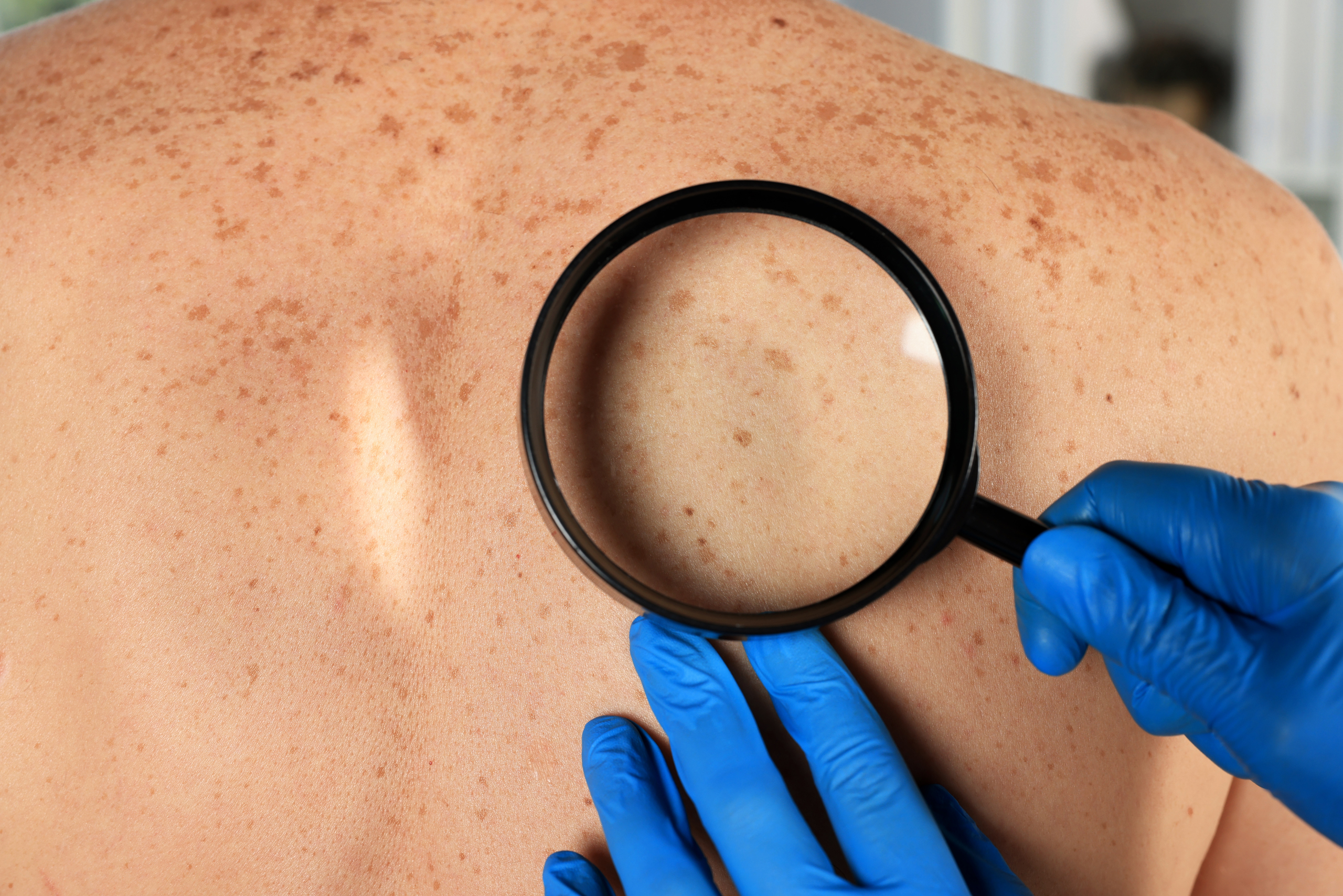
The medical literature has also published case reports of pigmentation changes, including rapid darkening of freckles and moles and the appearance of new pigmented lesions following prior exposure to Melanotan II.
Isolated cases of melanoma diagnosis have also been described in individuals who had previously reported using Melanotan II.
However, observations of this kind do not, on their own, establish a causal relationship. The temporal sequence alone is not sufficient evidence that Melanotan II caused melanoma to develop.
Data on changes in moles and pigmentation should be treated as safety signals requiring further research, not as a basis for defining the full risk profile of Melanotan II.
Is Melanotan II an approved tanning product?
No.
Melanotan II is not an approved medicinal or cosmetic product intended for tanning. There is also no approved regimen for its use for this purpose.
The status of Melanotan II should be distinguished from that of afamelanotide, which is the active substance in an approved medicinal product used for a specific medical indication.
Information obtained from studies on Melanotan II does not imply its approval for use as a cosmetic or medicinal product.
Melanotan II in laboratory research
In laboratory settings, Melanotan II can be a subject of research into melanocortin receptors, melanocyte biology, and mechanisms regulating melanin production.
It also allows analysis of the relationships between peptide structure and selectivity for individual receptors.
In vitro studies are conducted outside a living organism, for example using cell cultures.
Appropriately characterised reference materials can be used to confirm substance identity and to develop and validate analytical methods such as HPLC or LC-MS.
Studies of this kind enable analysis of the relationships between peptide structure, receptor affinity, and observed biological activity, among other aspects.
More information on peptide structure, lyophilisation, and analysis can be found in the ILABS article on what peptides are and how they are used in laboratory research.
Melanotropic peptides and Melanotan II — key takeaways
Melanotropic peptides are studied for their ability to interact with receptors involved in regulating melanocyte function and melanin production.
Changes in pigmentation were observed in small, early studies of Melanotan II. These findings provide information about the compound’s mechanism of action but do not provide a basis for considering it a safe or approved product for changing skin colour.
Melanotan II acts through mechanisms different from those of the DHA used in self-tanners. This difference is primarily relevant to biology and mechanistic research and should not be interpreted as a comparison of two alternative methods of tanning.
The increased pigmentation observed in some studies is not equivalent to sun protection and does not provide a basis for abandoning standard methods of protection against UV radiation.
Melanotan II is not an approved medicinal or cosmetic product intended for tanning.
From a scientific perspective, the compound remains a subject of research into the melanocortin system, pigmentation mechanisms, and the relationships between peptide structure and receptor activity.
References
- Cui R. et al. Central Role of p53 in the Suntan Response and Pathologic Hyperpigmentation. Cell. 2007;128(5):853–864..
- Dorr RT. et al. Evaluation of Melanotan-II, a Superpotent Cyclic Melanotropic Peptide in a Pilot Phase-I Clinical Study. Life Sciences.
- Ugwu SO. et al. Skin Pigmentation and Pharmacokinetics of Melanotan-I in Humans. Biopharmaceutics & Drug Disposition. 1997;18(3):259–269.
- Dorr RT. et al. Increased Eumelanin Expression and Tanning Is Induced by a Superpotent Melanotropin [Nle4-D-Phe7]-α-MSH in Humans. Photochemistry and Photobiology. 2000;72(4):526–532.
- Dorr RT. et al. Effects of a Superpotent Melanotropic Peptide in Combination With Solar UV Radiation on Tanning of the Skin in Human Volunteers. Archives of Dermatology. 2004;140(7):827–835.
- Habbema L., Halk AB., Neumann M., Bergman W. Risks of Unregulated Use of Alpha-Melanocyte-Stimulating Hormone Analogues: A Review. International Journal of Dermatology. 2017;56(10):975–980.
- Breindahl T. et al. Identification and Characterization by LC-UV-MS/MS of Melanotan II Skin-Tanning Products Sold Illegally on the Internet. Drug Testing and Analysis. 2015;7(2):164–172.
- Reid C., Fitzgerald T., Fabre A., Kirby B. Atypical Melanocytic Naevi Following Melanotan Injection. Irish Medical Journal.
- Composition comprising at least three active agents for colouring and/or pigmenting keratin materials — patent WO2014177406A1.